
ADPTiV is an accessibility-first fitness ecosystem designed to bridge the gap between standard exercise platforms and the specific needs of users with physical constraints. Produced as the major project for the Master of Design (Experience Design Course) at Griffith University, this 100% remote group project utilises a data-driven approach to solve for injury, disability, and inclusive user journeys.
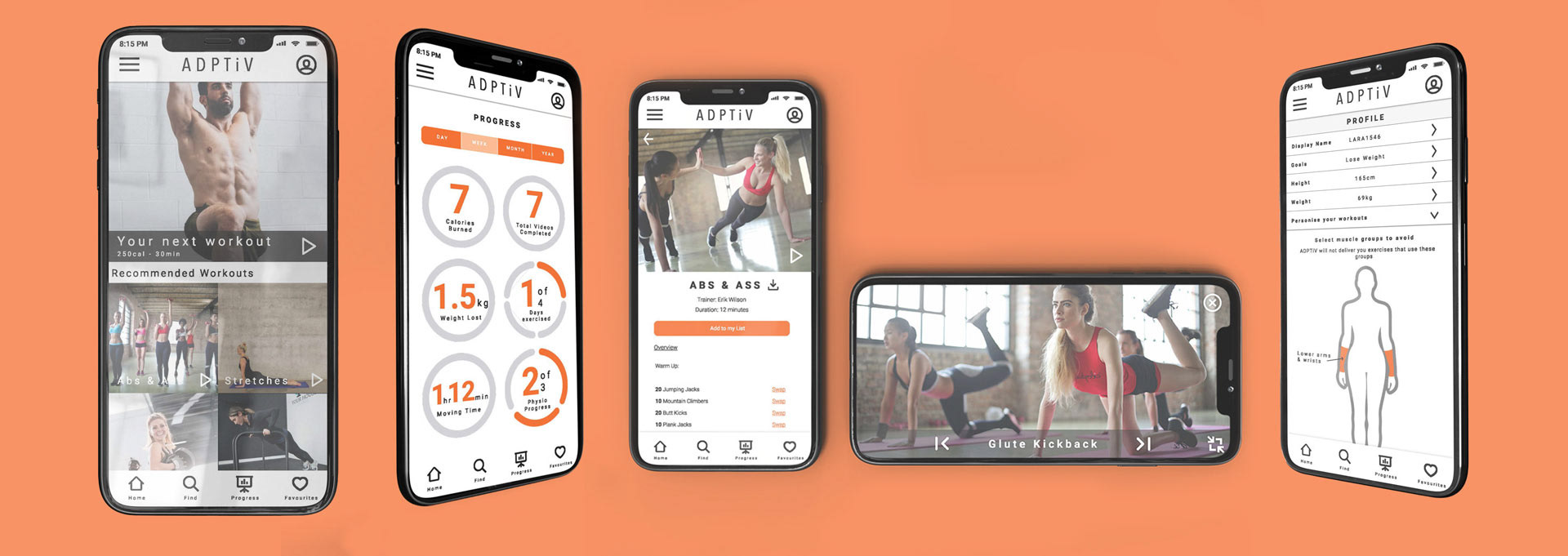
A 100% remote, research-led project focusing on accessibility in digital health.
THE CONTEXT:
Produced as the major group project for my Experience Design course during my Master of Design at Griffith University, ADPTiV is a fitness application concept designed to bridge the gap between standard exercise platforms and the specific needs of users with physical constraints
THE CHALLENGE:
Most fitness platforms operate on a "one-size-fits-all" model that assumes a fully able body. Our objective was to design a digital ecosystem that assists all users in reaching their goals by tailoring the experience to individual physical abilities, temporary injuries, or permanent disabilities..
THE WORKFLOW
This was a 100% remote group project, necessitating high-level digital fluency. We utilised a fully virtual workspace to maintain momentum:
Miro: Used for the discovery phase, persona building, and collaborative brainstorming.
Figma: Served as the primary design hub for wireframing, component building, and high-fidelity prototyping.
My Role: UX/UI Designer
Team: 4 Designers
Discovery & Research
The "Why" Behind the Design:
To validate the need for an inclusive ecosystem, we conducted an audit of global health and fitness trends. Our research highlighted a significant disparity in engagement for users with physical limitations:
Prevalence: Approximately 1 in 5 (18%) Australians live with a disability.
Physical Barriers: For 79% of these individuals, the main form of disability is physical.
The Satisfaction Gap: Satisfaction ratings for existing mHealth apps drop significantly for users with "difficulty using arms" or "difficulty walking," indicating a failure in current UI/UX standards to accommodate these demographics.
Clinical Insights
We conducted interviews with physiotherapy professionals to understand the transition from clinical rehab to home fitness. Experts noted that patients are typically provided with static printouts of specific exercises. They identified a critical need for a "recovery app" that features slow, effective, and visually demonstrated workouts, allowing for rehabilitation outside of the clinic.
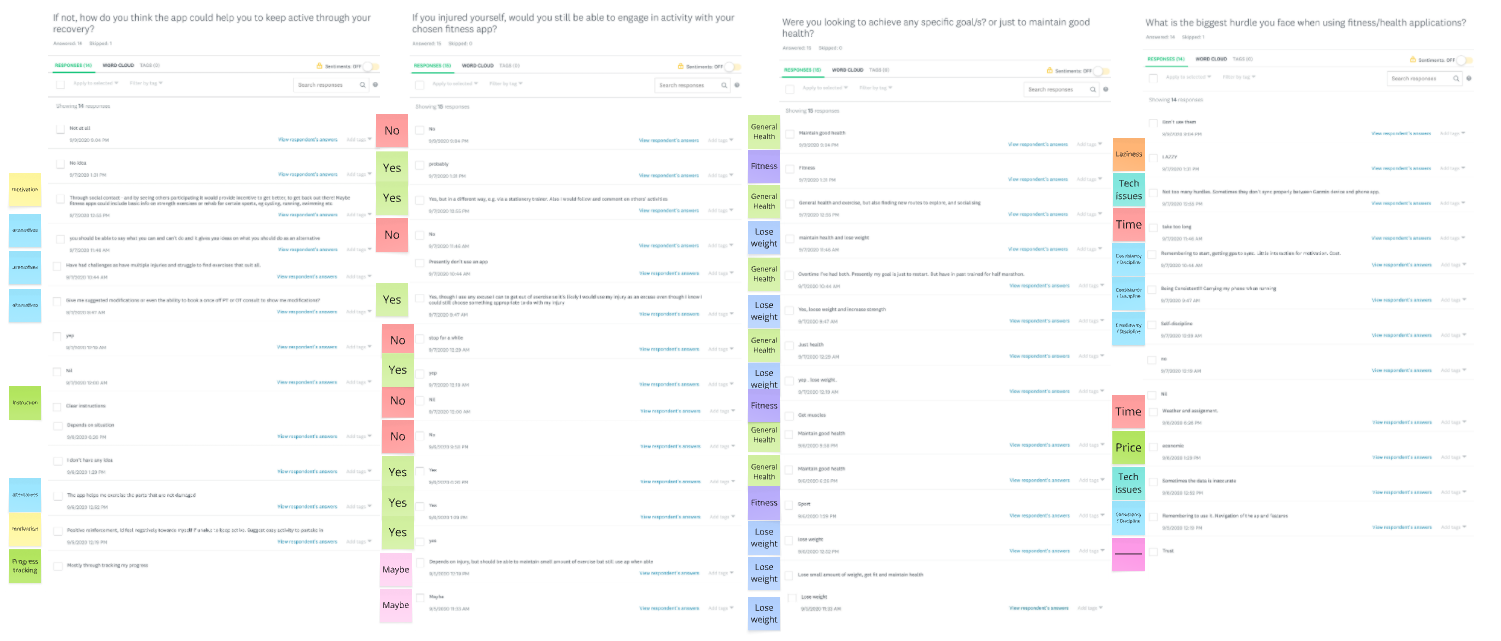
Using Miro to code qualitative research
Competitive Audit & Strategy
COLLABORATIVE MARKET ANALYSIS:
Our team performed a cross-platform audit of major market leaders, including Nike Run Club, Alo Moves, Joyrun App, Samsung Health, and Fitbit Coach, to identify gaps in functionality.
TEAM FINDINGS:
A recurring failure across competitors was the total absence of accessibility options or accommodations for medical issues. While some apps offered varied programs, they did not accommodate for temporary injuries, potentially leading to user abandonment or risk of further injury.
Persona & User Journey
Using our research, we developed a user persona to represent our users and created user journeys and storyboards.
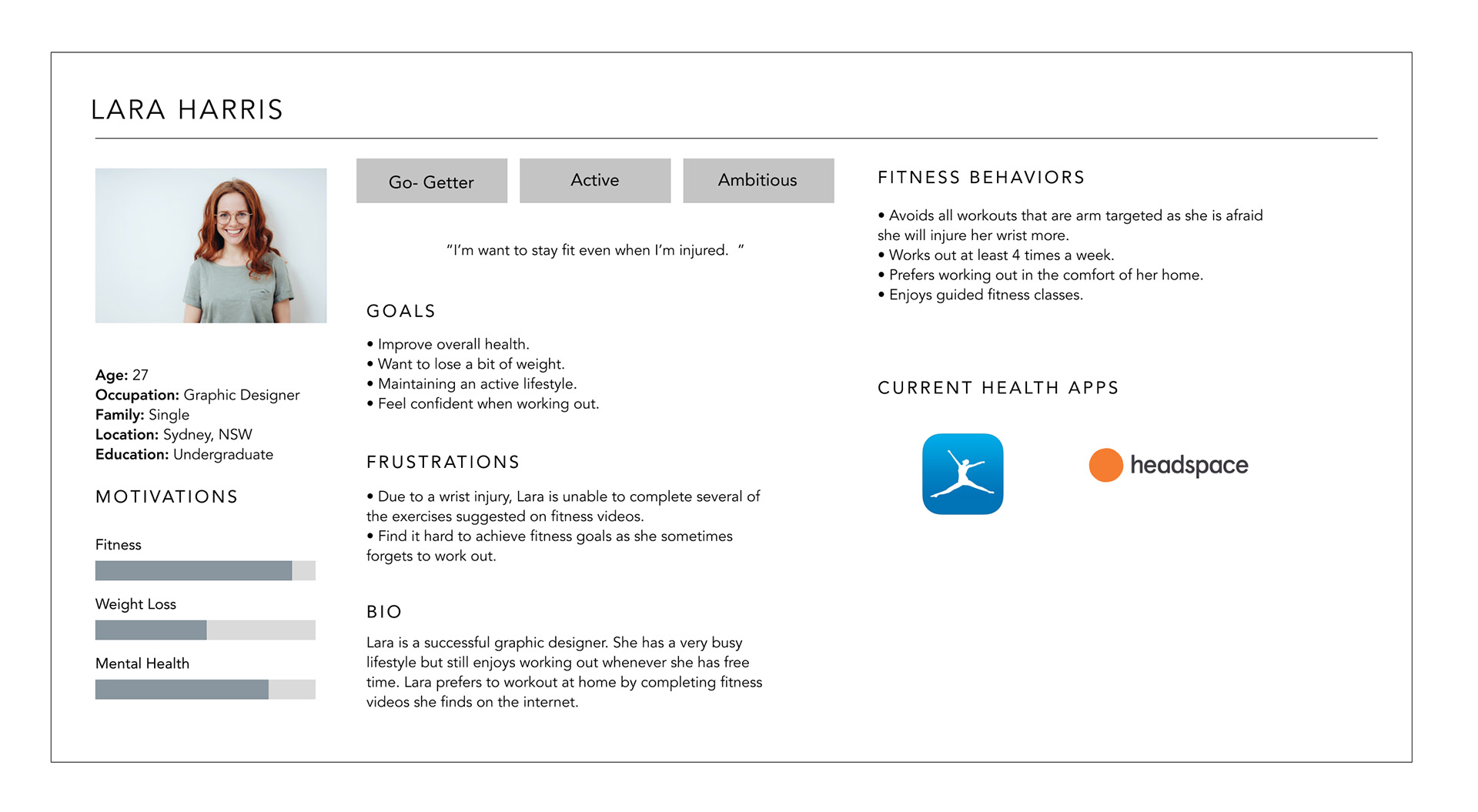
The Persona: Lara Harris We developed Lara, a 27-year-old active professional nursing a wrist injury. Her primary frustration was the inability to "blacklist" suggested exercises that aggravated her injury, preventing her from reaching her health goals.
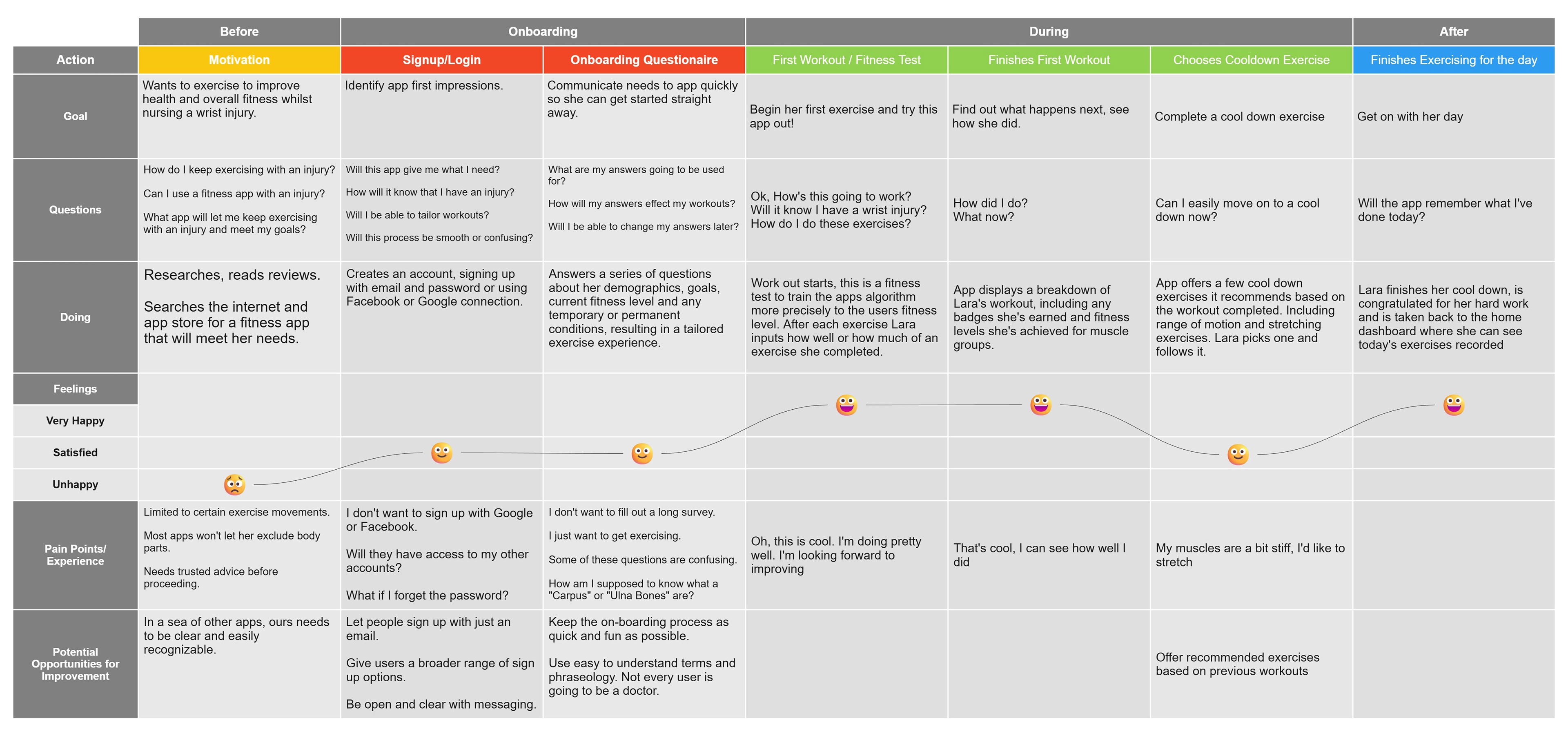
User journey map
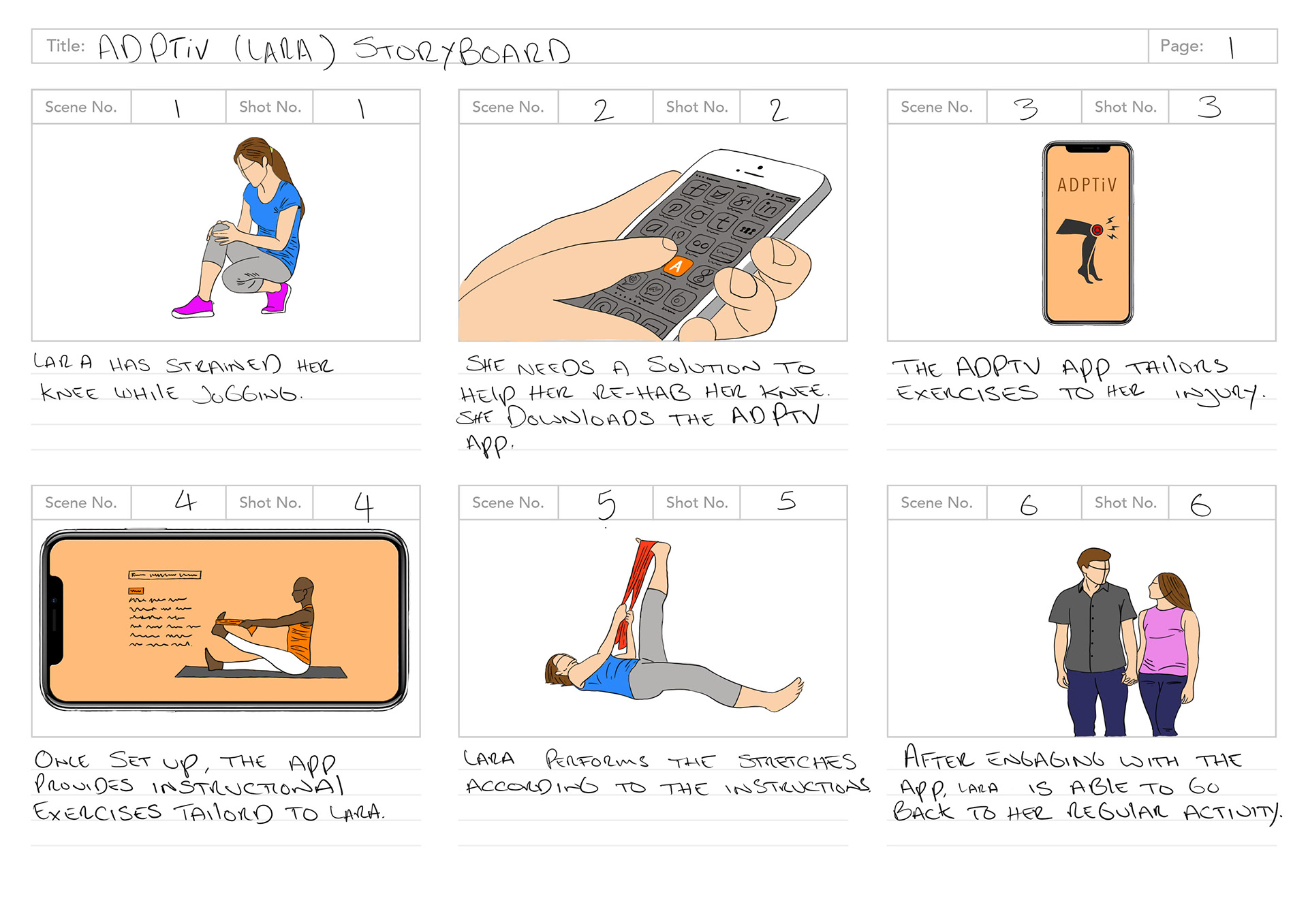
User Journey Storyboard
The UX Process
The Problem:
With people with all kinds of injuries and disabilities keen to exercise, how can we improve access to exercises to the injured and disabled without risking further injury to those users?
The Solution:
An interface that allows users to communicate physical needs quickly and intuitively. The app also integrates with physiotherapy professionals.
The Muscle Exclusion Map:
We implemented a "Body Map" interface where users can select muscle groups to avoid.
Dynamic Algorithm:
Once a group is "blacklisted" (e.g., lower arms and wrists), the app will not deliver exercises that use those groups, dynamically filtering the routine for safety.
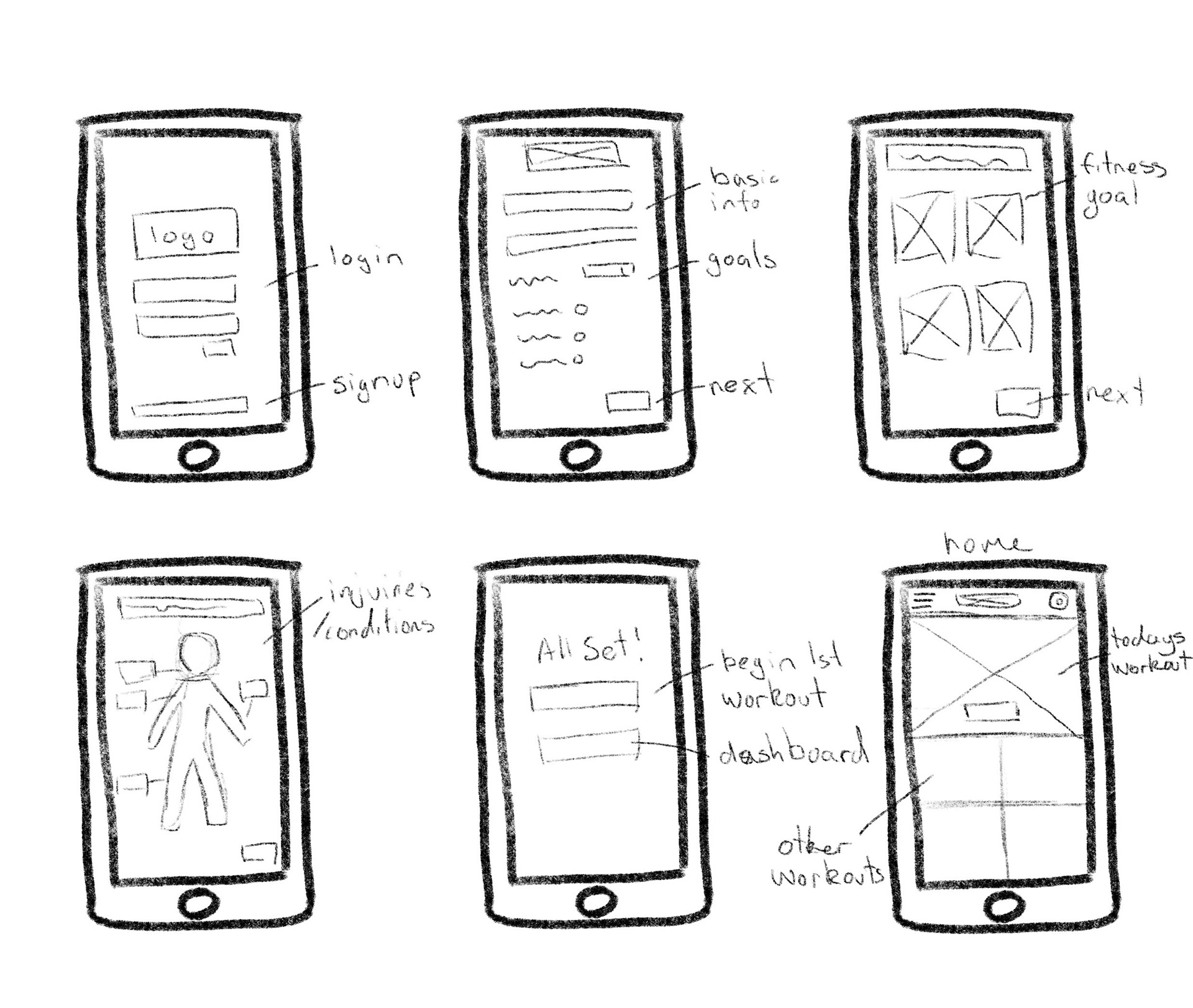
Signup process low-fidelity wireframe
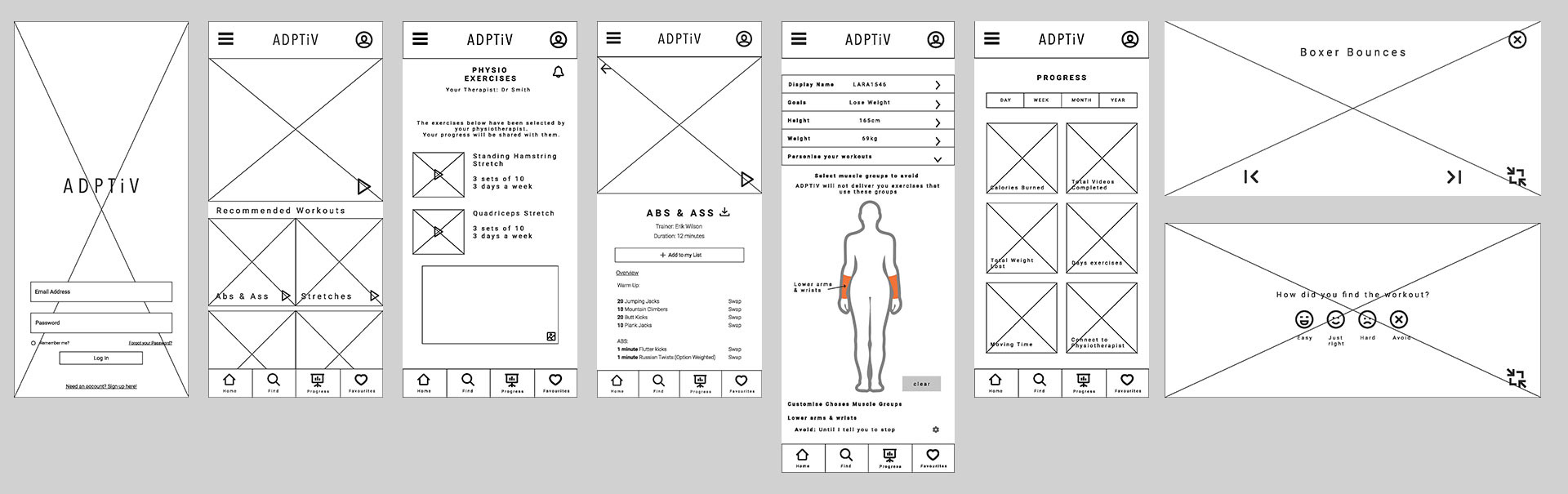
Key Screen Wireframes
The Final Design
Adaptive Feedback:
After each workout, users rate the difficulty and "feel" of the exercise (e.g., "Avoid," "Hard," or "Just Right").
Physio Integration:
A dedicated dashboard for "Physio Exercises" prescribed by real-world clinicians, including daily checklists and progress tracking.
Gamified Success:
To drive engagement, we implemented progress milestones like "Physio Progress" and "Total Videos Completed," rewarding users for consistent, safe participation
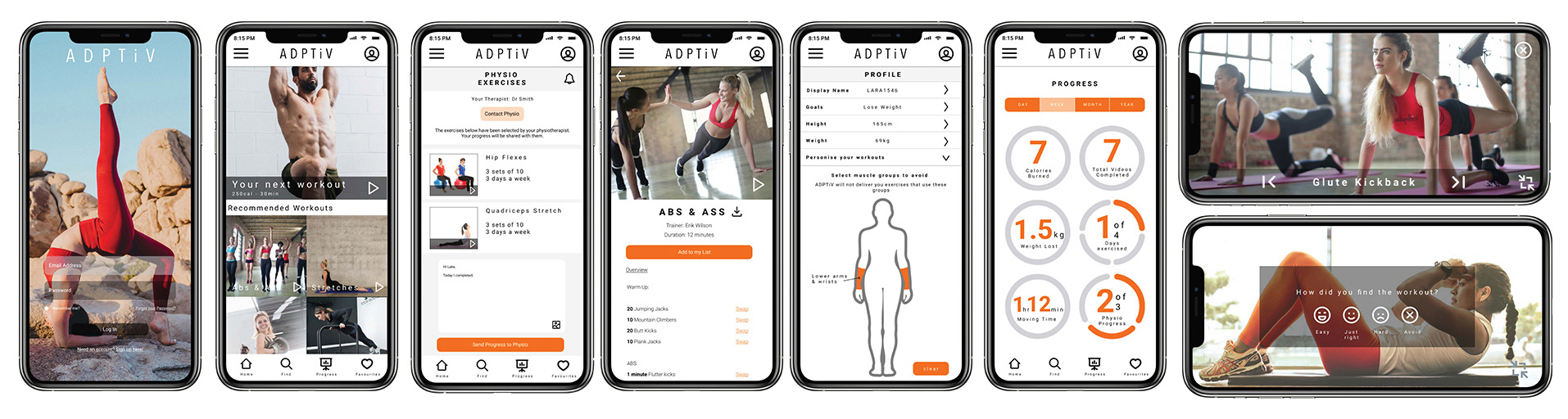
Key Hi-fidelity Screens